हिंदी
हिंदी
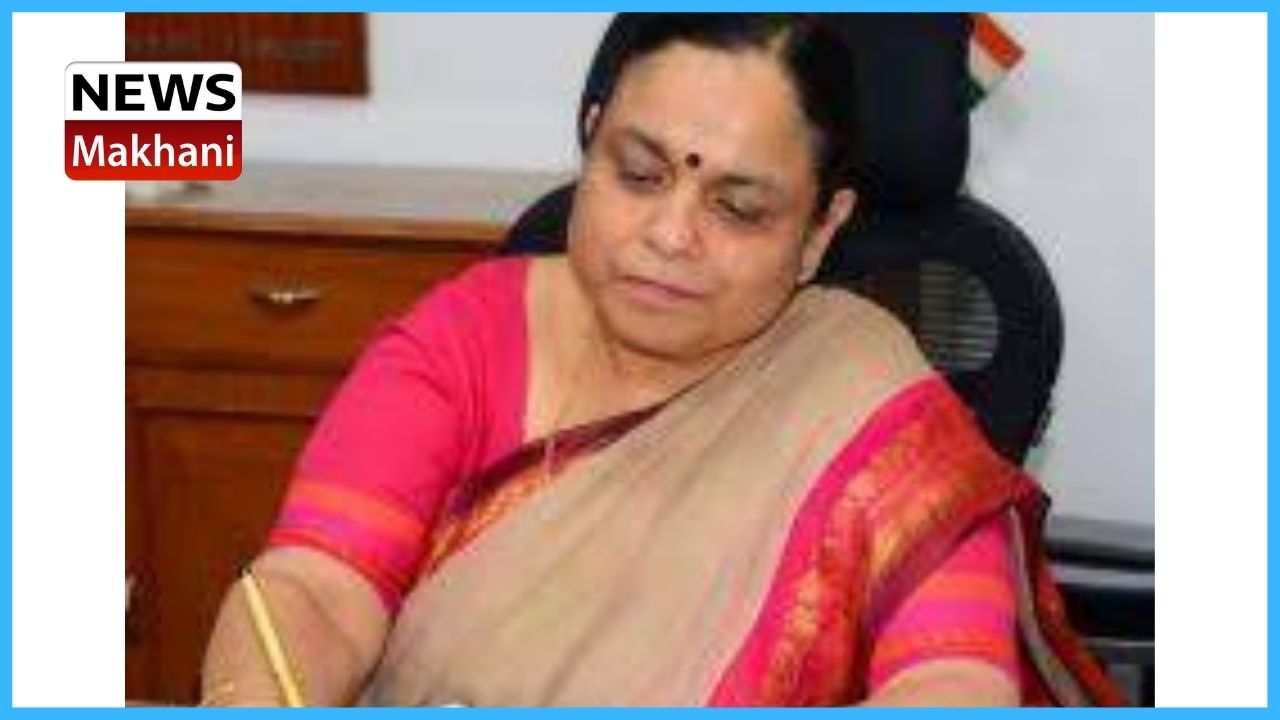
Chandigarh, March 22 – Emphasising on a multidisciplinary approach involving various Departments fused with a participatory community approach for coping depleting ground water, Chairperson, Haryana Water Resources (Conservation, Regulation and Management) Authority, Smt. Keshni Anand Arora said that a holistic approach is required rather than ad-hoc decision making.
Smt. Arora said that the HWRA has been working under the dynamic guidance of Chief Minister, Sh. Manohar Lal so as to preserve water. She said that the Chief Minister has been emphasizing on improved groundwater governance in the state and the HWRA is working on systematic planning.
While observing the World Water Day today with theme – ‘Groundwater, making the invisible visible’, the Haryana Water Resources (Conservation, Regulation and Management) Authority had orgnaised a webinar today. The topic of webinar was ‘Ground Water Governance in Haryana: Its Possibilities & Challenges.’ Matching with the global endeavour of making groundwater visible to stakeholders, Haryana is also making foundational steps in the same direction.
Preserving water is the need of the hour
Speaking on the occasion, Smt. Arora said that the generation today should follow the ideology of Father of the nation- Mahatma Gandhiji’s who said, ‘The earth, the air, the land and the water are not an inheritance from our forefathers but on loan from our children. So, we have to hand over to them at least as it was handed over to us’. Smt. Arora elaborated that depleting ground water it is an emergency situation and has to be handled at any cost. She congratulated Additional Chief Secretary, Sh. Devender Singh, Dr Satbir Kadian and Sh. Pramod Jain who hae strategically planned Atal Bhujal Yojana in the State. She specified that the HWRA is closely associated with all the activities and is working to make an impact on various aspects of water especially the ground water. She added that HWRA is working for surface water, treated water and ground water as well.
Smt. Arora further added that the Haryana Water Resources Authority has categorized all the villages of the State in seven different categories based on groundwater table. Shae shared that 1948 villages are categorized as severely groundwater stressed villages where depth to water table range is between 30.01 & more, 1093 villages are categorized as moderately groundwater stressed villages where depth to water table range is between 20.01 to 30.0. Meanwhile, 333 villages are categorized as potential water logged villages where depth to water table is 1.51 to 3.0 and 88 villages are categorized as severely water logged villages where depth to water table is 0.0 to 1.5 meter. Smt. Arora said that this categorization has been appreciated at the Government level. She further added that the HWRA is spearheading the formulation of district water plan with water gap analysis at the block level with emphasis on Dvivarshik Plan for water recharging and conservation.
She further added that she is aware of fact the DIPs are playing a very crucial roles assisting the districts in formulating such plans. Integrating policy and practise of groundwater management at the level of villages will be the major goal of the district authorities. Groundwater governance and management would require large scale capacity building, data and knowledge of aquifer and aquifer based management.
Challenges and Strategies to be adopted
Listing the various challenges and the strategies that can be adopted to manage these challenges Smt. Arora said that there are two major challenges firstly, water depletion mainly in areas of Ambala Kurukshetra, Karnal, Kaithal, Fatehabad and Mahendragarh and secondly the water logging across the State. She shared that it is cause of concern that even Ghaggar area is facing water depletion presently. Among the strategies that can be adopted to prevent ground water depletion she said that implementing micro-irrigation, dviersion of water consuming acitivies via practicing schemes like Mera Paani, Meri Virasat, Rooftop Rainwater Harvesting and Recharging through defunct wells. Various strategies that can be adopted to prevent water logging are, sub surface drainage, micro irrigation, planting salt tolerate crops, encouraging afforestation and optimum utilization of surface and ground water.
Dr Himanshu Kulkarni, Executive Director of ACWADAM; Mr Pratul Saxena, Director, NPMU, and Dr Dipankar Saha, Former member CGWB were the technical speakers for this webinar.
Speaking at the webinar, Dr Himanshu Kulkarni, Executive Director of ACWADAM stated that the groundwater can be managed sustainably by adopting the five P’s i.e. Principles, People, Process, Practice and Policies. Speaking at the occasion, Dr Dipankar Saha, Former member 0f CGWB had drawn light over the Haryana Preservation of Sub Soil Water Act, 2009 and rice shoot policy. He stated that by adopting the said act, the groundwater was well managed in the paddy dominated areas in Haryana and it led to positive impacts. Sh. Pratul Saxena, Director – NPMU, Atal Bhujal Yojana had also shared his thoughts during the webinar. During his talk, he had talked about the integrities of Atal Bhujal Yojana. He stated that in Atal Bhujal Yojana, the strongest decision-maker will be the community and the whole program will be led by them.
The closing address was delivered by Dr Satbir Singh Kadian, EIC-IWRD cum Project Director Atal Bhujal Yojana Haryana. He informed that under Atal Jal Yojna Jal Panchayat will be organized in each Gram Panchayat. During this, the villagers will take ownership of their groundwater resources and decide the future action in consultation with the state team. He further said that this program will revolutionize groundwater governance in the state and will set an example for the entire country.
The webinar was joined by around 500 participants. The state and district officials of Irrigation and water resources remain present during the webinar.