English
India–Africa Relations Are Based on the Principles of Equality, Mutual Respect and Shared Development: CM Nayab Singh Saini
Haryana Is the First State in the Country to Establish a Separate Department of Foreign Cooperation to Promote International Collaboration: CM
Chief Minister Calls Upon African Nations to Accelerate Growth through Partnerships with Haryana in Agriculture, MSMEs and Startups
Chandigarh, 13 February 2026
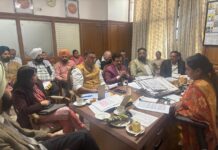
With the objective of giving a new direction to industrialization and economic cooperation in Haryana, the Haryana–Africa Strategic Partnership Meeting was organized on Friday at Surajkund in Faridabad. During the meeting, extensive deliberations were held on the vast possibilities of cooperation between Haryana and African countries in the fields of industry, trade, investment and technological collaboration. Ambassadors and High Commissioners from 21 African nations, along with representatives from industry and policymakers, participated in the meeting.
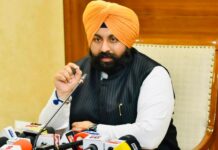
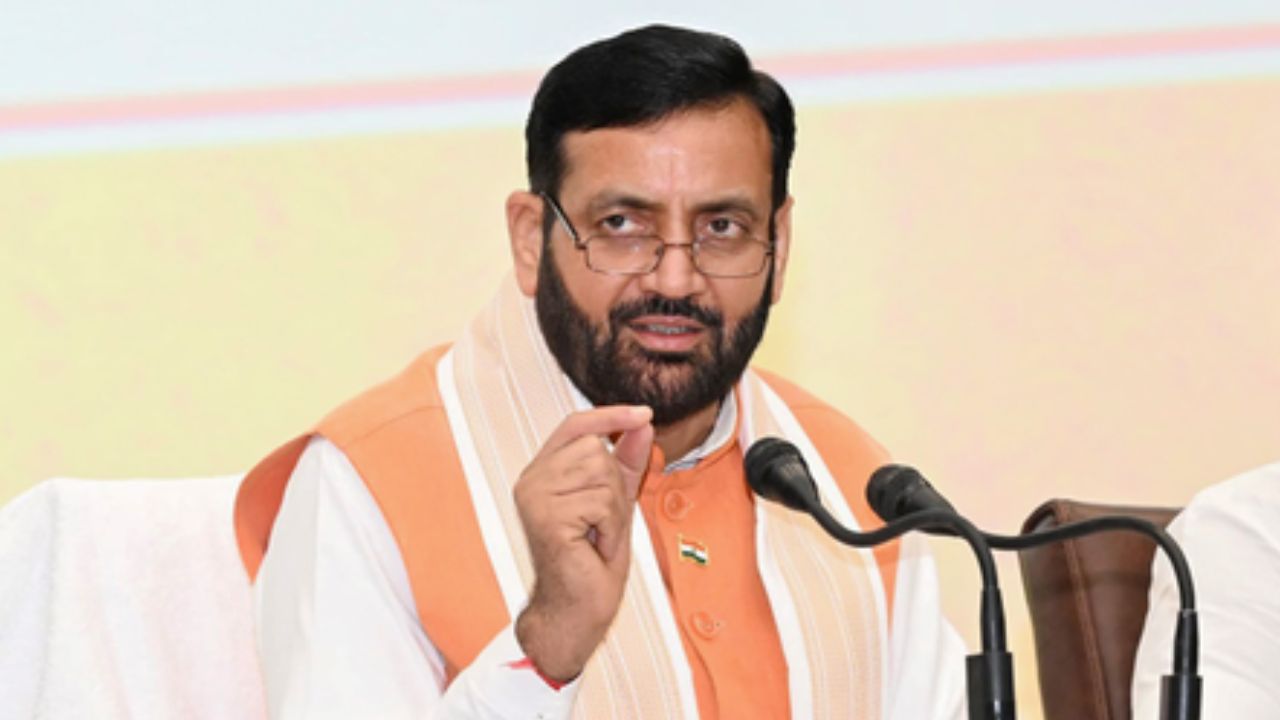
Addressing the gathering, Haryana Chief Minister Sh. Nayab Singh Saini welcomed the international representatives and said that from the sacred and culturally rich land of Surajkund, a new chapter of India–Africa partnership has begun. The Surajkund International Crafts Mela serves as a global platform for folk traditions, handicrafts, creativity and human skill, strengthening cultural connections and economic cooperation.
The Chief Minister stated that India–Africa relations are founded on the principles of equality, mutual respect and shared development. In line with the vision of Prime Minister Sh. Narendra Modi, Haryana is committed at the state level to building long-term and strong relationships with African countries. Haryana is the first state in the country to establish a separate Department of Foreign Cooperation to promote international collaboration.
He said Haryana is emerging rapidly as a growth engine in agriculture, manufacturing, MSMEs, food processing, automobile components and startups. Due to its connectivity with the NCR, the state enjoys global connectivity and logistical strength, offering vast possibilities for multi-sectoral cooperation with African nations. Highlighting agriculture as a key area of India–Africa collaboration, he said Haryana’s expertise in irrigation management, improved seeds, crop diversification, agricultural mechanization, dairy and post-harvest management can help strengthen food security in African countries.
He also mentioned the possibilities of joint farming, training programmes and technical partnerships with Kenya, Tanzania, Uganda, Ethiopia and Rwanda. Agreements signed with the Tanzania Investment Centre and other agricultural and institutional bodies will promote trade, investment and agricultural cooperation. He added that there is significant scope for collaboration in automobiles, healthcare, IT, construction, skill development, startups, fintech and MSME sectors. Region-specific industrial and agriculture-based partnerships can be developed with countries across Southern, Western, Eastern and Northern Africa.
Describing renewable energy, water conservation and green development as shared moral responsibilities, the Chief Minister said joint efforts in solar energy, water management and environmental sustainability are essential for securing the future of coming generations. He emphasized that the Surajkund International Crafts Mela is not merely a platform for trade, but a symbol of the creative economy and cultural identity.
Golden Opportunity to Give New Direction to India–Africa Trade Relations: Rao Narbir Singh
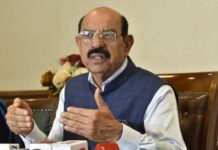
Industry and Commerce Minister Rao Narbir Singh said that this is an important opportunity to further strengthen trade relations between India and Africa. In recent years, bilateral trade between India and Africa has reached approximately USD 90–100 billion, reflecting strong economic partnership between the two regions. He informed that India primarily imports crude oil, gold, coal, fertilizers and minerals from Africa, while exporting petroleum products, pharmaceuticals, automobiles and auto components, machinery, rice and engineering goods. He added that this trade is not limited to goods but is also expanding into sectors such as education, healthcare, IT and capacity building.
He said Haryana is making a significant contribution to India–Africa trade. The state mainly exports auto components, tractors and agricultural machinery, pharmaceutical products, engineering goods, plywood and IT services to African countries, while importing mineral metals and certain agriculture-based raw materials from Africa. He emphasized that skill development and workforce mobility are also important dimensions of cooperation. Through structured skill training, certification and formal employment channels, new opportunities can be created for youth in both regions. He stated that the objective is clear — to boost trade, promote investment and establish long-term partnerships through institutional dialogue.
The meeting was attended by representatives from several African nations, including the Arab Republic of Egypt, the Republic of Tunisia, the Togolese Republic, the Republic of Ghana, the Republic of Guinea, the Federal Republic of Nigeria, the Islamic Republic of Mauritania, the Republic of Chad, the Democratic Republic of Congo, the United Republic of Tanzania, the Republic of Cameroon, the Republic of Djibouti, the Republic of South Sudan, the Republic of Rwanda, the State of Eritrea, the Republic of South Africa, the Republic of Zimbabwe, the Republic of Malawi, Algeria and Sudan.
In addition, senior officials from the Ministry of External Affairs, Government of India, including Foreign Secretary Sh. Vikram Misri, Secretary (Economic Relations) Sh. Sudhakar Dalela, Secretary (South) Dr. Neena Malhotra, Joint Secretary (West Asia & North Africa) Sh. Suresh Kumar M., Additional Secretary (Central & West Africa Division) Sh. Sevala Naik Mude, Joint Secretary (East & Southern Africa) Sh. Janesh Kain, and Joint Secretary (States Division) Sh. A. Ajay Kumar were present.
From the Haryana Government, Principal Secretary, Department of Foreign Cooperation, Amneet P. Kumar; Additional Principal Secretary to the Chief Minister, Dr. Saket Kumar; Director General, Information, Public Relations, Language & Culture Department, Sh. K. Makarand Pandurang; Director General, Department of Foreign Cooperation, Sh. Ashok Meena; Deputy Principal Secretary to the Chief Minister, Sh. Yash Pal; Managing Director, Tourism Department, Sh. Parth Gupta; Advisor, Department of Foreign Cooperation, Sh. Pawan Choudhary; OSD, Ministry of External Affairs, Col. Sanjeev Kumar; and Under Secretary, Rita Meena were also present.