हिंदी
हिंदी
Statewide outreach, early disease detection and expansion to 70+ citizens mark major push in preventive healthcare: Dr. Sumita Misra
Chandigarh, 23 April 2026
Haryana’s flagship preventive healthcare programme NIROGI Haryana has achieved a major milestone by screening over one crore people and conducting more than 5.86 crore laboratory investigations free of cost, significantly strengthening early disease detection and public health delivery across the State.
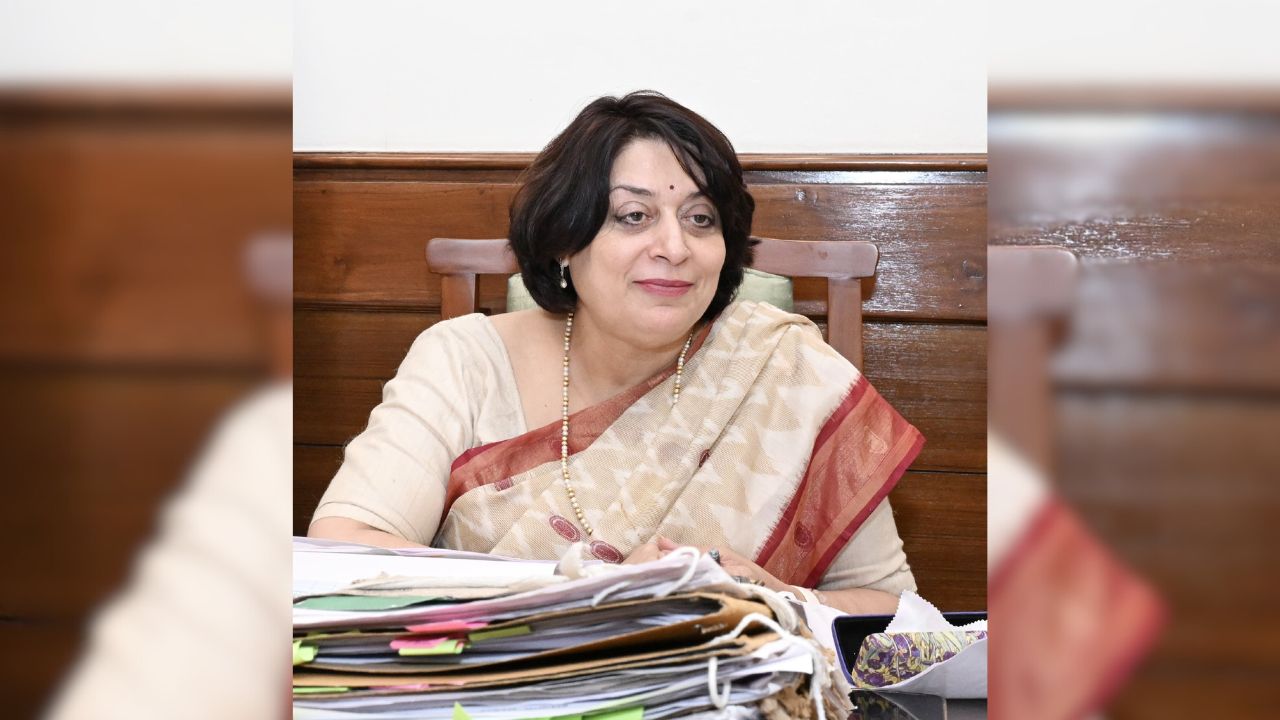
Disclosing this after a high-level review meeting, Additional Chief Secretary, Health and Family Welfare and Medical Education & Research, Dr. Sumita Misra, said that as of April 21, 2026, a total of 1,00,07, 430 beneficiaries from Antyodaya families have been screened under the programme. The initiative, aimed at economically weaker sections, has ensured 5,86,60,875 laboratory tests free of cost, reducing out-of-pocket expenditure for thousands of families.
Originally designed for families with annual income up to Rs. 1.8 lakh, the scheme is scheduled to be expanded to cover households earning up to Rs. 3 lakh annually. This revision has increased the target beneficiary base from 1.59 crore to approximately 2.30 crore people, substantially widening the reach of preventive healthcare services. In the third phase, Hon’ble CM has directed to include all citizens above 70 years, regardless of income.
The programme has moved beyond hospitals to reach people at their doorstep. As many as 1,11,116 outreach camps have been organised, screening over 38.63 lakh beneficiaries, while Mobile Medical Units have conducted 12,579 camps, covering nearly 2.8 lakh people. In addition, screening has been carried out in 25,907 Anganwadis, 14,316 schools, and 13,034 industrial and high-risk areas, ensuring inclusive coverage across age groups and regions.
NIROGI Haryana provides structured and age-specific health check-ups, including physical examination, vital monitoring, laboratory investigations, diagnosis, treatment, and referral services. The programme covers a wide range of conditions, including anaemia, diabetes, cardiovascular diseases, cancers, and congenital disorders, ensuring early detection and timely intervention.
Highlighting the impact, Dr. Misra shared that several serious conditions have been detected at an early stage through the programme. Patients diagnosed with cancers, heart defects, rare neurological disorders, and severe anaemia have received timely treatment through referrals to higher medical institutions, demonstrating the programme’s transformative role in saving lives.
In line with the 2026–27 Budget announcement by Chief Minister Nayab Singh Saini, the programme will now cover all citizens above 70 years of age, irrespective of income. This step is expected to provide a major safety net for elderly citizens, further strengthening inclusive healthcare. The programme has detected a total of 8,69,966 disease conditions, including 2,99,090 cases of anaemia, 1,33,528 of hypertension, 1,05,238 of diabetes, 6,410 of cardiac disease, 1,257 cancer cases, and 3,518 TB cases.
The initiative has gradually expanded from 32 initial sites to over 2,000 health facilities across the State. Implementation has been supported by a dedicated digital platform, strengthened laboratory infrastructure, trained healthcare personnel, and continuous monitoring mechanisms to ensure efficiency and transparency.